 Shipping Paused Until 9/20/25 during move to new warehouse (will ship sooner if possible).
Key Takeaways:
- Choosing the right spot is half the job (follow the three Ws)
- Build a simple debris shelter (quick and easy)
- Insulate the walls and the ground to avoid heat loss
- Always pack the right gear when going on an adventure
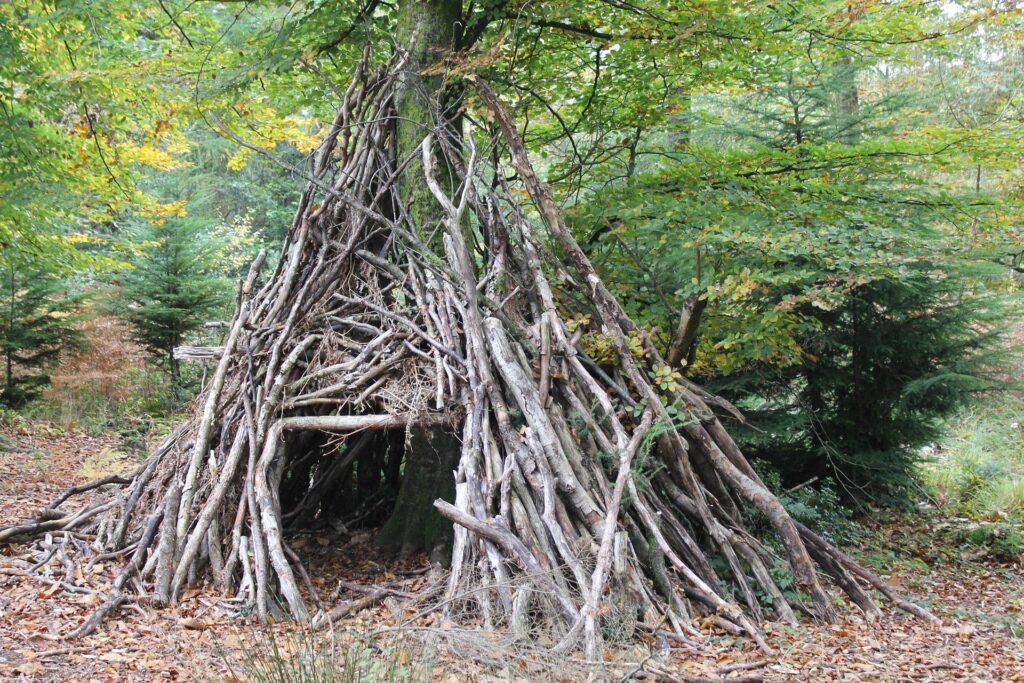
Imagine this: you’re stuck in a forest, you have no idea where you are, and it’s going to get dark soon. No need to panic; building a bushcraft shelter is actually very easy if you just calm down and follow the bushcraft shelter tips outlined in this article.
Choosing the Spot
Here’s probably the most important, but also one of the most overlooked bushcraft shelter tips: location is as important as the quality of the shelter.
When picking out a location, watch out for the three Ws:
- Wind
- Water
- Widow-makers
When it comes to wind, you can thank Mother Nature for developing an inexhaustible supply of cliffs, caves, rocks, and even trees that are large enough to protect you from wind. You don’t want to be exposed to wind for health reasons, but also because it’s just uncomfortable and you won’t rest properly.
When it comes to caves, they’re good shelter, but be very careful when exploring them. First of all, animals, including predators that are dangerous for humans (such as bears) often reside in caves. Secondly, some caves contain carbon dioxide. You could die when you fall asleep if you take shelter in such a cave.
Water is an important resource, and you don’t want a shelter that’s too far away because you’ll always have to hike to get water. At the same time, don’t build a shelter right next to water – animals need to drink too, and a pack of wolves might stumble upon you on their way to their favorite drinking spot.
Widow-makers are half-dead branches that can be broken off and kill you if the wind blows hard enough.
As for other bushcraft shelter tips, you should never build on wet ground because it’s more challenging to manipulate, and it’s also likely that the ground is part of a natural downpour during rainfall.
Ideally, you should build your shelter atop a flat plateau that’s protected from the wind with no half-dead trees and branches close by.
Building a Simple Debris Bushcraft Shelter
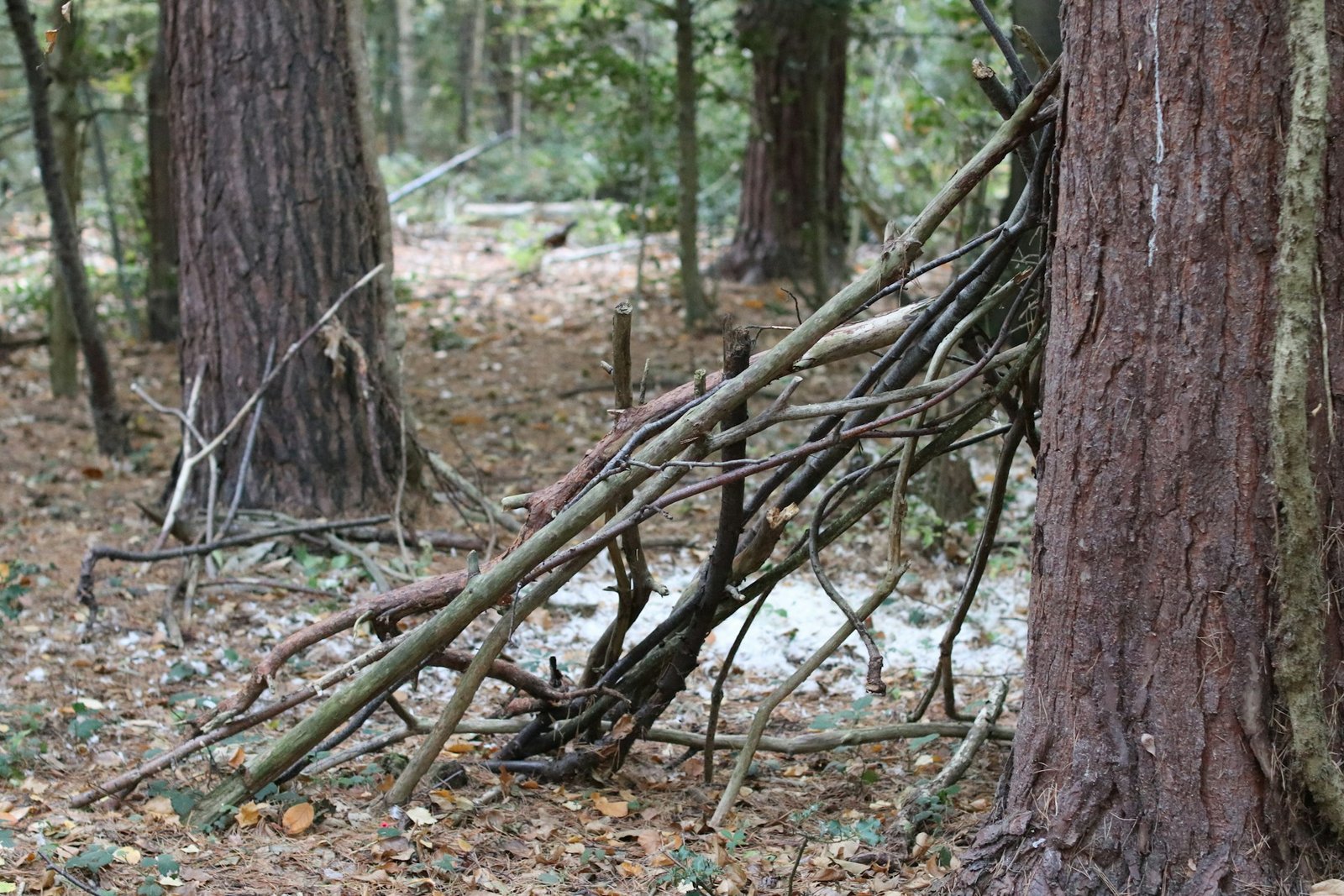
What is a bushcraft shelter? Just hiding under a large enough branch can be considered shelter, while there are even survival stories in which survivors built entire houses because they were stuck in the wilderness for so long.
It’s essential to approach this topic realistically. After all, no one is actually getting lost with construction equipment on hand. Therefore, we’ll focus on a debris shelter, which is pretty much the easiest type of shelter to build. You don’t even need a knife to build it (although it would make many things easier).
This type of shelter relies on a strong frame to act as a spine for all other materials.
Step One – The Spine
Find a long, strong, thick branch. This is by far the most important part of your shelter as it holds everything else in place.
Dig one end of the branch into the ground, and lay the other onto your shelter’s bearing wall (the tree or the rock you decided to use as wind protection). When you look at it from the side, the branch, the ground, and the bearing wall should form a triangle.
Ensure that the branch is securely dug into the ground. It should not move when you put weight on it.
If it checks those boxes, it’s time for step two.
Step Two – The Walls
The next step is collecting anything from a dozen to a hundred sticks and fresh, green branches (preferably pine). Lay the sticks against the main branch and dig the other ends into the ground, then lay the fresh branches on those sticks. Feel free to lay as many lush branches as you want – the thicker the better, as it will provide better insulation and protect you from the wind.
Do the same on the other side of the shelter, but make sure to leave just a little bit of room on one side for you to enter and leave your shelter.
Is it going to be comfortable? No, but this kind of shelter is going to keep you protected from the elements, and when you’re in a survival scenario, that’s pretty much the most important thing.
Step Three – The Mattress
Here’s one of the more useful bushcraft shelter tips. You can build your own mattress from the very same thick branches you used to build the walls of your shelter. This is actually very important because you lose a significant amount of heat through the ground, which provides considerable insulation.
How To Make Shelter Building Easy?

Whenever you’re going on a trip in the wilderness, whether camping, hiking, or hunting, always assume the worst and expect to end up stuck. With this in mind, you also need to pack for the worst-case scenario.
That means that you have to carry:
- Enough water
- At least one knife
- Paracord
- Tarp
- Food
- First aid kit
- Means of communication and navigation (a charged phone, for example)
And these are just the most basic supplies that you should always carry with you on a hike. You could make the list three times longer with water filters, MREs, weapons, a tent, a sleeping bag, and other stuff.
Also, remember that your first move when you find yourself in any emergency scenario should be to call emergency services! Building a bushcraft shelter is only an option if you can’t find help.
To make shelter building easier, ensure you have at least the basic outdoor gear when venturing out.
FAQ
How Long Does It Take To Build a Bushcraft Shelter?
An experienced survivalist who has built a shelter before can construct a simple debris shelter in under an hour, after gathering all the necessary materials. More complex shelters require longer construction times.
How Much Will It Cost To Build a Shelter?
Monetarily, it will cost you nothing. You’ll pay for your shelter in the form of sweat.
What Is The Difference Between Bushcraft and Survival?
Bushcraft refers to the skills and knowledge that enable individuals to thrive in natural environments. Survival generally refers to making it out alive from any kind of emergency scenario, and it’s not necessarily confined to wilderness survival (although the two terms overlap in many ways).
How Do You Purify Water In The Wild?
There are legitimate water purification tools that remove all harmful bacteria, parasites, and pathogens. There is no foolproof way of purifying water without those tools. Still, you can make it relatively safe by filtering it through an improvised filter consisting of larger and smaller rocks, sand, and charcoal. Always boil water before drinking it in the wild.
Can I Build a Hut In The Woods?
Legally, no. However, if you find yourself in a survival scenario and building a shelter is the difference between life and death, you can build anything you need to save your life.

Daniel Wilder is a dedicated team member at Architect Knives. With a passion for high-quality craftsmanship and innovative design, Architect Knives ensures every knife will exceed your expectations. Outside of work, you’ll often find Daniel putting the latest knife designs to the test while camping, hunting, and exploring the great outdoors. Follow his insights and adventures in the world of precision blades at Architect Knives.